
Butterfly Life Cycle

A remarkable process of transformation

Butterflies undergo complete metamorphosis through four distinct stages: egg, caterpillar (larva), chrysalis (pupa), and adult butterfly. Each stage plays an important role in the butterfly's life. The length of each stage varies depending on the species, weather conditions, and availability of food for the caterpillar. 
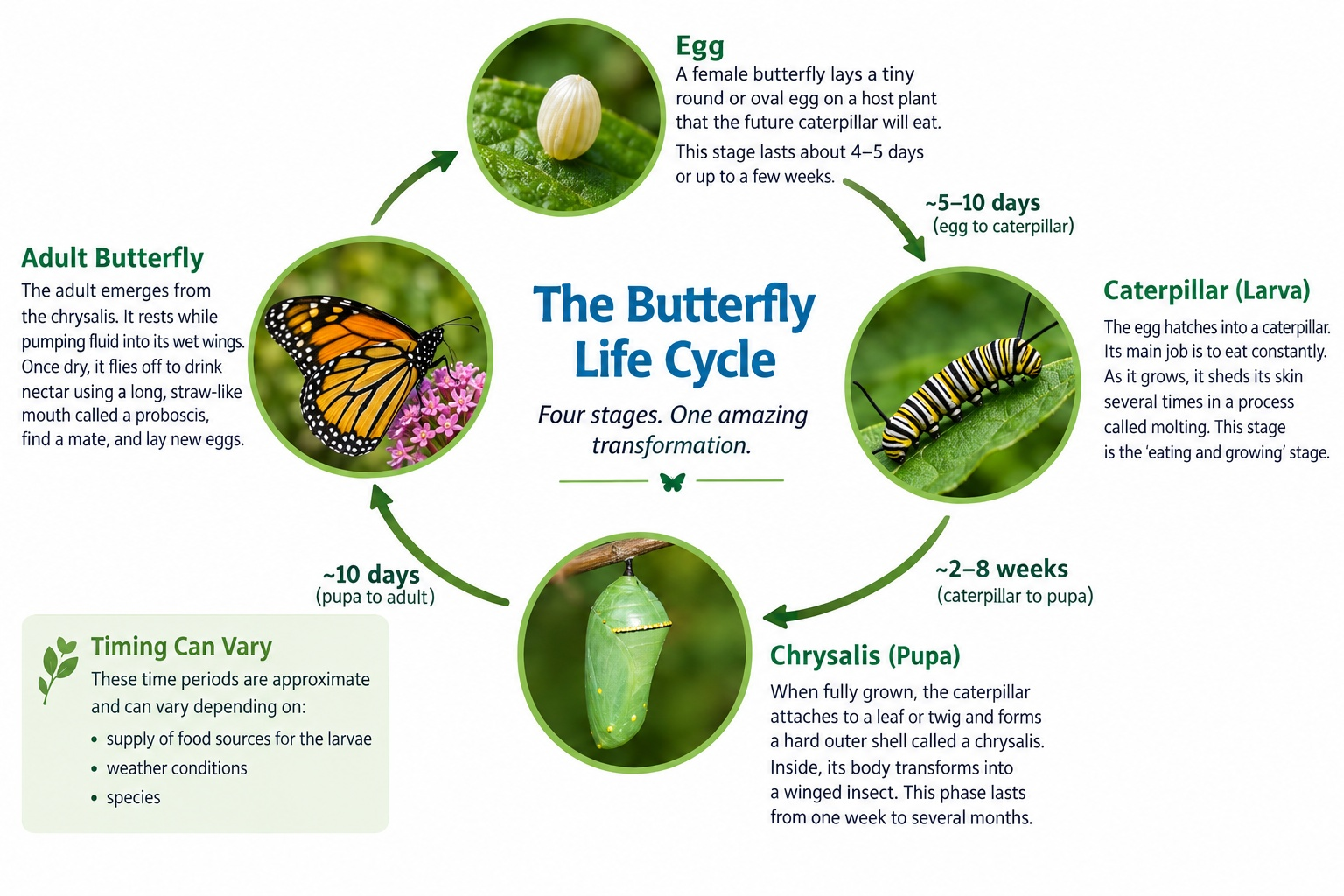
The Butterfly Life Cycle.
Four stages. One amazing transformation.

Egg: 
A female butterfly lays a tiny round or oval egg on a host plant that the future caterpillar will eat.
This stage lasts about 4–5 days or up to a few weeks.

~5–10 days
(egg to caterpillar)

Caterpillar (Larva)
The egg hatches into a caterpillar. Its main job is to eat constantly. As it grows, it sheds its skin several times in a process called molting. This stage is the ‘eating and growing’ stage.

~2–8 weeks
(caterpillar to pupa)

Chrysalis (Pupa)
When fully grown, the caterpillar attaches to a leaf or twig and forms a hard outer shell called a chrysalis. Inside, its body transforms into a winged insect. This phase lasts from one week to several months.

~10 days
(pupa to adult)

Adult Butterfly
The adult emerges from the chrysalis. It rests while pumping fluid into its wet wings. Once dry, it flies off to drink nectar using a long, straw-like mouth called a proboscis, find a mate, and lay new eggs.

Timing Can Vary.
These time periods are approximate and can vary depending on:

The supply of food sources for the larvae.
The weather conditions.
The species.