
Butterfly Anatomy
Knowing these terms will make it easier to follow butterfly ID guides and descriptions on this website
Like all insects, butterflies have three main body parts: the head, thorax, and abdomen. They have six jointed legs, two pairs of wings, and a pair of antennae. Their bodies and wings are covered with tiny scales. Learning a few basic parts of a butterfly can help you understand how butterflies live—and can also help you identify the species you see.
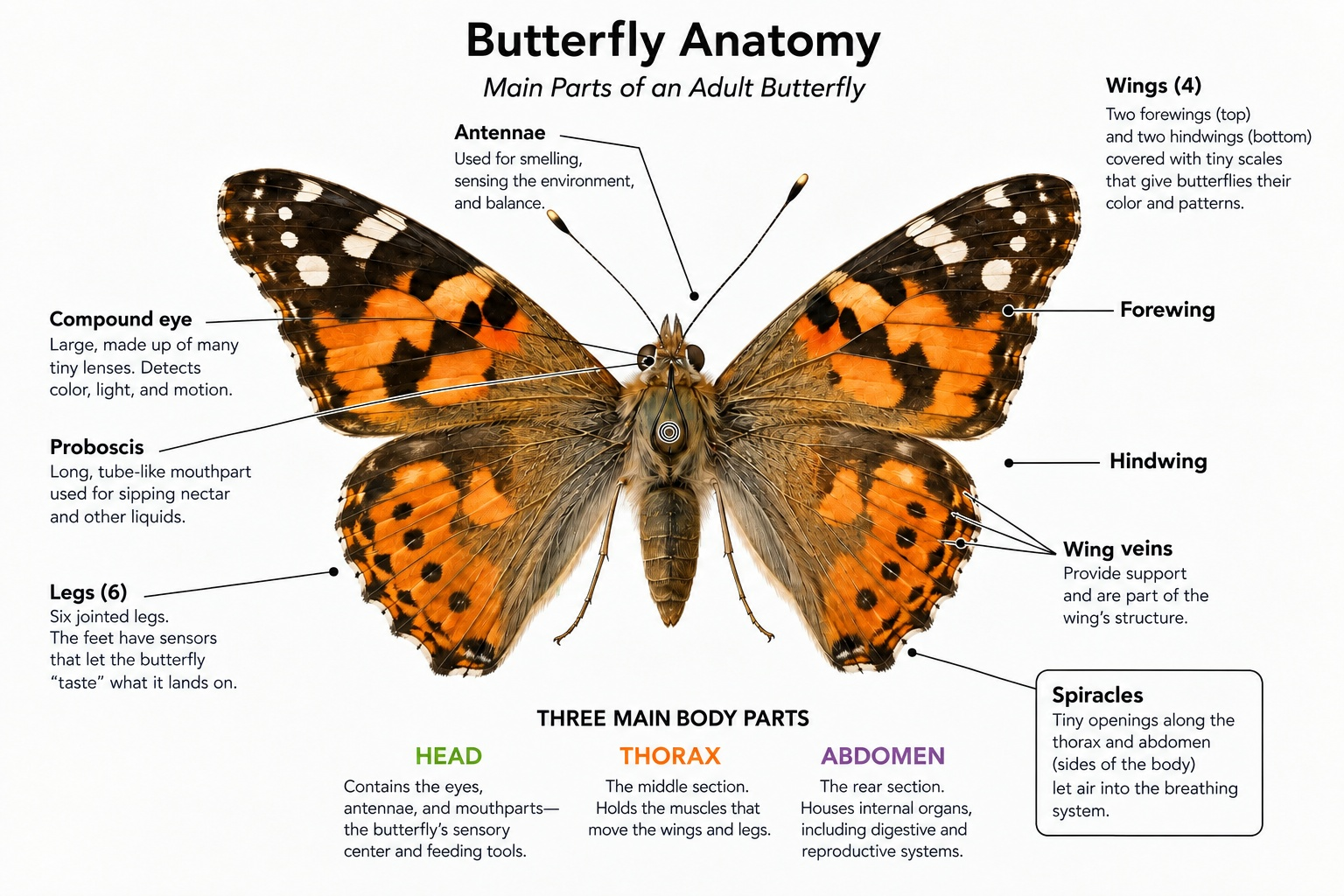
1. HEAD
The head contains the butterfly's main sensory organs and its mouthparts.
- Eyes: Butterflies have two large compound eyes made up of many tiny lenses. They can see colors, light, and movement and have a very wide field of vision.
- Antennae: A butterfly has two antennae that are used for smelling, sensing their surroundings, and helping with balance. The tips are usually club-shaped, which helps distinguish butterflies from most moths.
- Proboscis: The proboscis is a long, tube-like mouthpart used for drinking liquids such as flower nectar. When not in use, it is coiled up like a tiny spring.
- Palps: Small projections called labial palps are located near the proboscis. They have sensory functions and help the butterfly detect and identify food.
2. THORAX
The thorax is the middle section of the body. It contains the muscles that power the butterfly's wings and legs.
- Legs: Butterflies have six jointed legs. Their feet contain sensory organs that can detect chemicals, allowing a butterfly to "taste" what it lands on. This is especially important when a female is choosing a plant on which to lay her eggs.
- Wings: Butterflies have four wings—two forewings and two hindwings. The wings are attached to the thorax and moved by powerful muscles.
- Scales: Butterfly wings are covered with thousands of tiny, overlapping scales. The scales produce the colors and patterns that make butterflies so recognizable. The scientific name for the order that includes butterflies and moths, Lepidoptera, means "scaly-winged."
- Wing veins: The veins give the wings support and form an important part of the wing's structure. The pattern of the veins can also be useful in identifying butterflies.
- Spiracles: Small openings called spiracles along the thorax and abdomen allow air to enter the butterfly's breathing system.
3. ABDOMEN
The abdomen is the rear section of the body. It contains most of the butterfly's internal organs, including the digestive and reproductive systems.
- Breathing system: Air enters through the spiracles and travels through a network of tiny tubes inside the body.
- Digestive system: The digestive tract processes the food and liquids the butterfly consumes.
- Reproductive organs: The reproductive organs are located in the abdomen. At the end of the abdomen, males have structures used during mating, while females have structures used to deposit their eggs.
A Closer Look - When you look at a butterfly, try to identify these basic parts:
Head → Thorax → Abdomen
Antennae → Eyes → Proboscis → Legs → Forewings → Hindwings → Wing veins
